
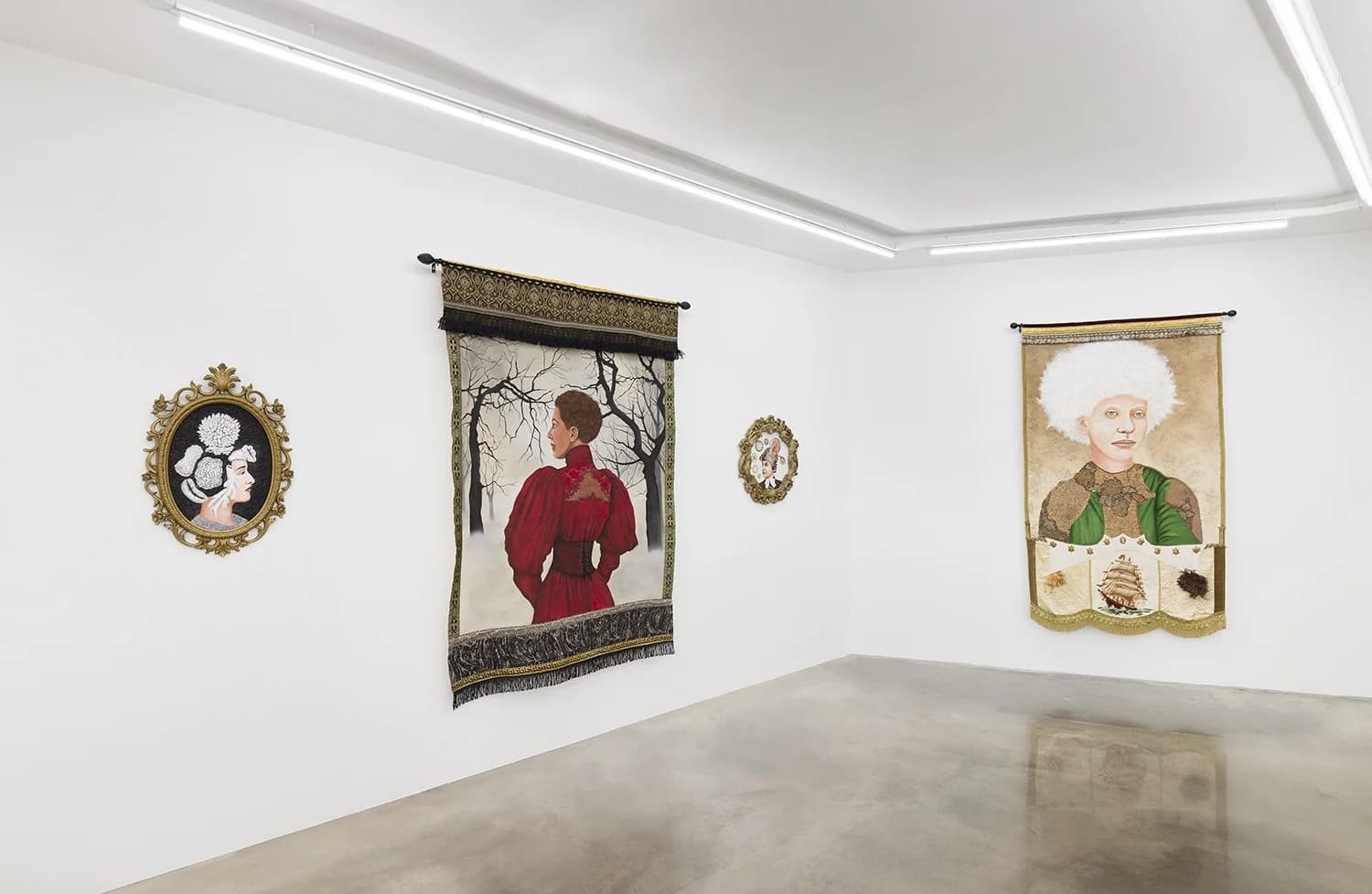
Various Small Fires is pleased to present Lezley Saar’s first exhibition with the gallery, and her debut presentation in Asia.
Through surrealist celestial paintings, collages, and tapestries, Saar’s work explores a range of topics, among them mixed-race identity and the nuances of gender and sexuality. The daughter of the artistically acclaimed Saar family, which includes Lezley’s mother Betye Saar and sister Alison Saar, this new series is an interpretation of avant-garde French poet Antonin Artaud’s Black Garden (originally published in French as Le Jardin Noir in 1915). The poem uses references to nature — lilies, black water, a “capsized sun”— to create a scene that resonates with Saar for its Gothic, melancholic, and surrealist vision.
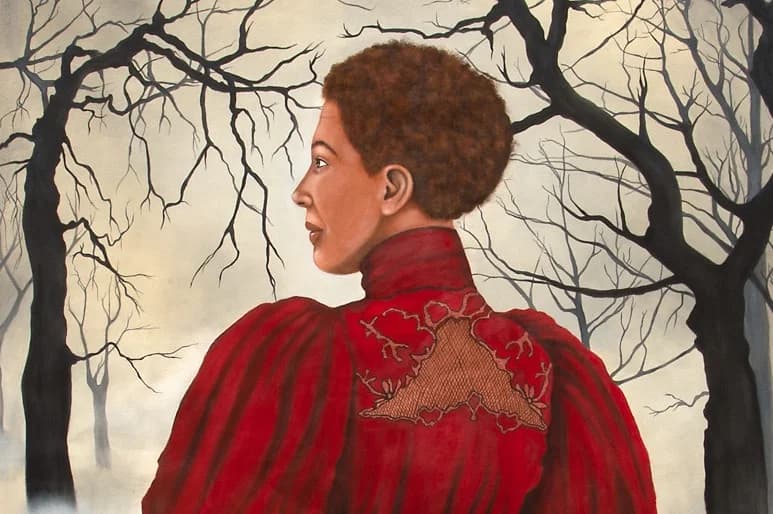
The artist read the poet’s writing in French and then manipulated Artaud’s writing into painted form. Rather than simply illustrating Artaud’s text, Saar refers to her paintings, which take lines from the poem as titles, specifically as “translations” of the poem. Saar says that the human figures in her paintings anthropomorphize the flowers in Artaud’s jardin noir, a point most directly embodied by the moss and flowers that crown several of her figures’ heads — simultaneously headpieces and strange, surrealist appendages.
The cellular forms in the artist’s paintings, seen in a number of the works here, recall many of the artist’s earlier paintings. The artist is invested in symbolism, and these references to molecular biology are closely tied to the artist’s commitment to investigating questions of identity — especially sexuality, gender, and race — at a literally cellular level. The artist herself is mixed-race and addresses her African American heritage in an historic context. She is especially interested in 18th and 19th century colonial history, including Mexican casta paintings— themes referenced by the artist’s golden frames and her subjects’ occasional colonial-style garb.
 Lezley Saar