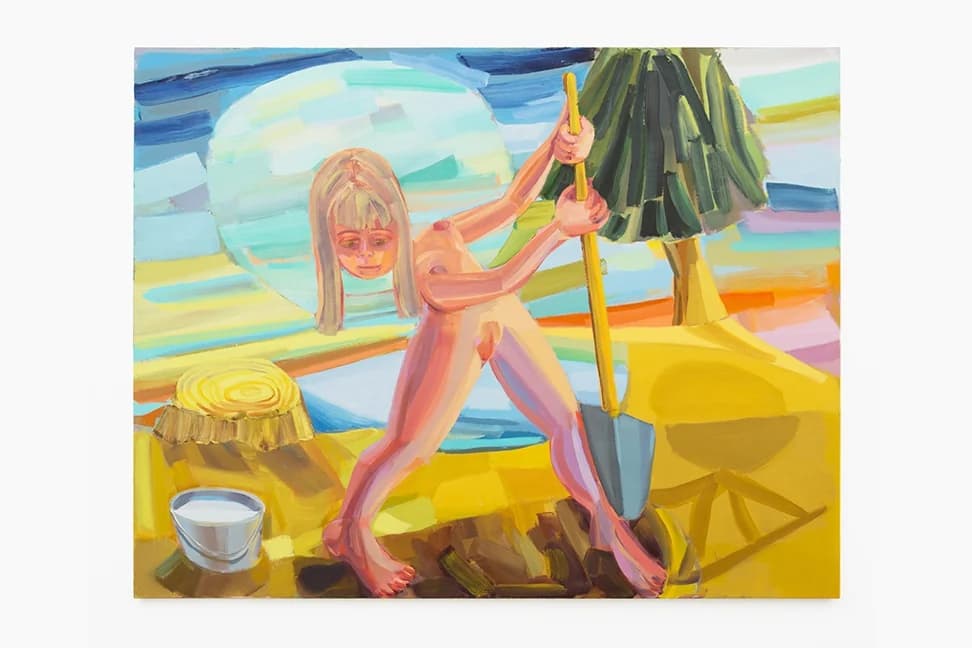
“In the high desert, where I was raised by Amazons, the days were long and the nights were longer, alas, Cinderella had left twenty years before my arrival. I was borne to a red headed body builder: whose sister was a blond disk jockey, a spinner of fast and loud music. My mother’s mother could not change a tire, but often struck out on her own driven by a dark longing to visit the children from her first marriage. This tribe of women thought it was important to drive a car, ride an unbridled horse, swim in the wild sea, carry a heavy load, earn your own money, make a fine bowl of porridge and know where the fuse box is. This is a true story.”
– Judith Linhares, 2018
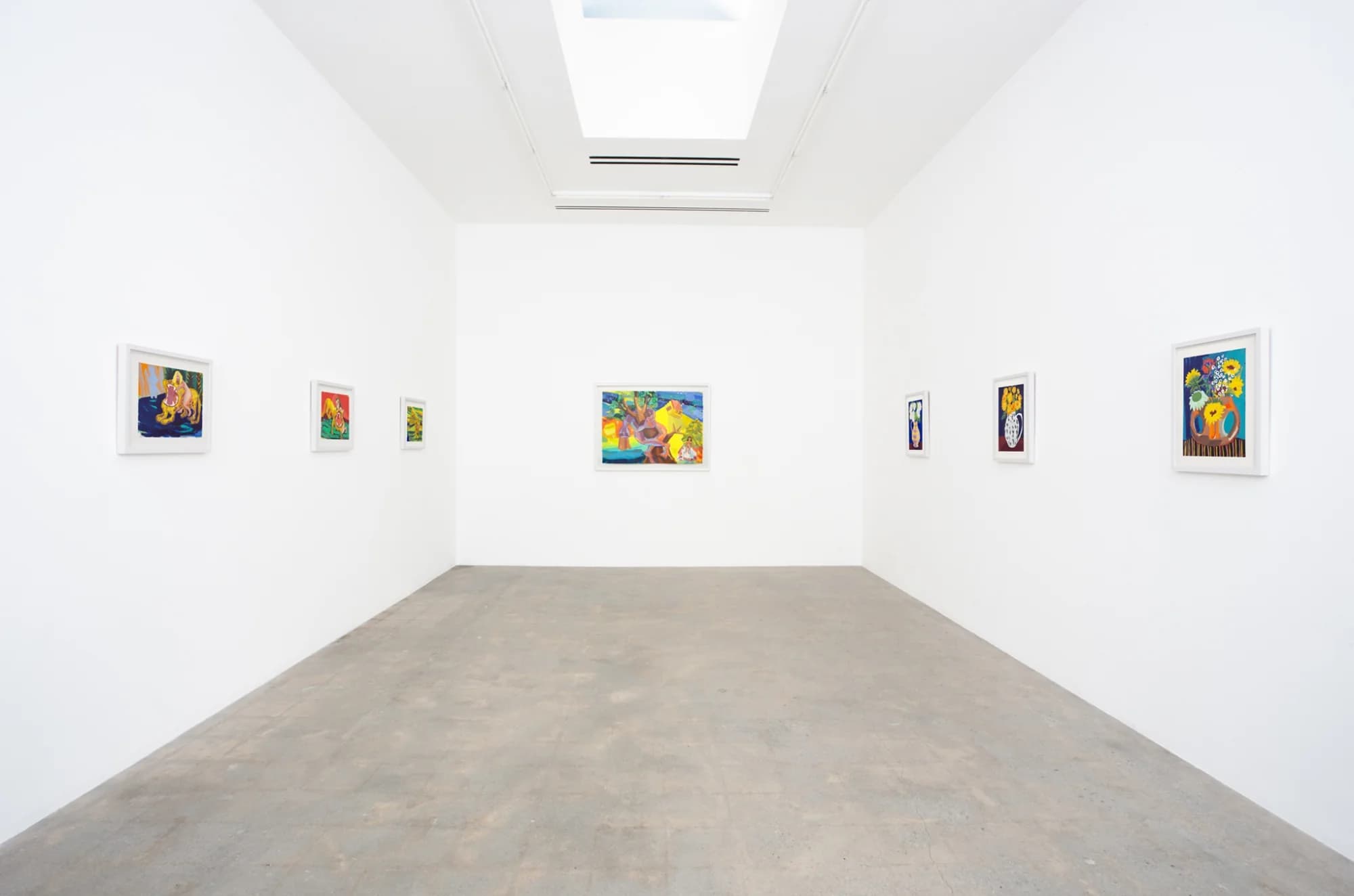
Judith Linhares (b. 1940, Los Angeles) grew up cavorting among the beach towns and mountainsides of Southern California and studied art in Oakland, California during the political and social revolution of the 1960s. Her paintings, comprised of loose-limbed, unabashed women who climb, dig, ride naked on horseback and delight in drunken revelry, transpired out of an era of liberating changes catapulted by feminism, conceptual art and performance as practiced by Terry Fox and Linda Montano and the transgressive sentiments shared by underground cartoonists, Robert Crumb and S. Clay Wilson in the 1970s. Fueled by the permissive, psychedelic atmosphere of the decade, Linhares began to investigate the relationship between the conscious and unconscious and would continue to record her own dreams in journals for the next 50 years. For Linhares, the elemental narratives of dreams, myths and fairy tales continue to provide inspiration for kaleidoscopic compositions that teeter between fantasy and reality. Her dream journals were recently acquired by the Smithsonian Museum in Washington, D.C.